
The simple idea of breaking things down sounds like a simple thing to do however I am always surprised how rarely we actually do it. When I did break the tasks i need to do down, it had helped me handled my feelings of anxiety, fear, and feeling constantly overwhelmed especially in stressful periods. While practicing it, I realise what it does for the mind can be tremendous for someone in a struggle to grasp a situation.
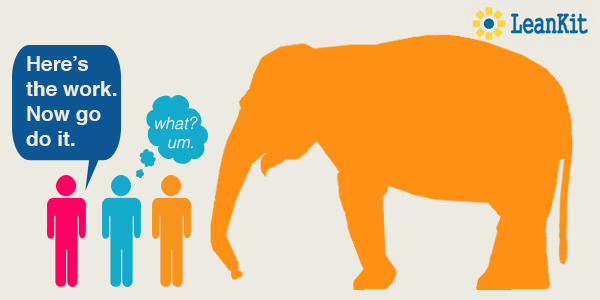
Let’s start by imagining the thought of travelling to an event at a location which you haven’t been to before, how would it make you feel? Uncertain, unsure, unconfident…
Let’s attempt to break it down further into steps of what is required to be done to consider the task completed:
My Task List
- Research on the address online
- List travel routes to location
- Make a decision on the travel route
- Travel to location
You may or may not realise, after breaking it down, the thought of travelling to an unknown location doesn’t seem that intimidating at all. While breaking it down, our mind operates in a much more functional way…
Tasks seems more manageable and less overwhelming
When we break things down,
the task becomes much lighter & comprehensible for the mind to accept, simply because we no longer sees it as a huge ambiguous task, but little executable ones
The mind is smart to know that it is much more possible to execute them, rather than viewing it as one huge daunting task.
Spending less time thinking about the future/past
When our mind gets into the motion of thinking; we foresee the permutations of what can happen and bring out certain past experiences as data-points for us to plan better ahead. While all these data is important, thinking does has its limits when one goes into an overthinking mode. The more we overthink, the more we will cause our minds to bring up bad experiences, thoughts, which brings about fears, anxiety, uncertainties.
I would like to stress that these emotions are not bad, however too much of it can make it very challenging for our mind to operate rationally. The human mind is a danger-oriented one, so if there is a thought that makes you feel threatened, you can bet that your mind will spend more time/effort thinking about it. And eventually, we will end up just living in our heads without doing the actual work to move forward.
Breaking things down gets us in the mode of thinking what actually needs to be done at a micro level. As you can imagine, our mind will shift away from thinking about unactionable thoughts, like what may or may not happen.
Clarity on the details
When tasks are broken down to smaller pieces, it facilitates the mind to think deeper into the details (Which is really what you need to do anyways), gaining more clarity on what needs more attention than the others.
Using the same example, let’s include more details into the already broken down tasks:
- Research on the address online
- Takes 2 min
- generally easy to do
- just need to use google for the address
- List travel routes to location
- Takes 5 min
- generally easy to do
- just need to use google map to plot all the possible routes
- Make a decision on the travel route
- Takes 5 min
- not so easy as I may need to consider a number of factors:
- travel budget
- time to travel
- time that i can start travelling
- Travel to location
- Dependent on point 3
At this point, with a good amount of specificity, I can understand what needs to be done exactly and what issues I might possibly face…
Application with Scrum
When practicing Scrum, we will realise that the idea of breaking things down is embodied into the tools and actions we do everyday.
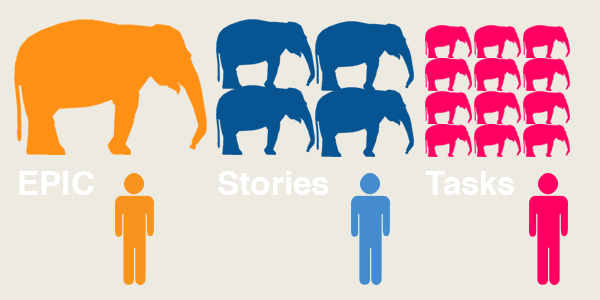
Features are broken down into EPICs, EPICs are broken down into stories, and Stories are broken down into Tasks. And events like Backlog Grooming, Sprint Planning, provides the time and space for team members to constantly break down the requirements and get into the details every Sprint.
Just imagine practicing this week in week out; it allows the team to reduce ambiguity and uncertainty in the things they need to do, and at the same time progressively clarifying and improving the level of detail understood by them to execute it.
The Scrum framework is nothing but a set of tools to facilitates this process, however embodying the intention and purpose is key to help us apply the same concepts into any part of our lives.
Application to everyday living
The simple example demonstrated here is a possible event we may face in our day-to-day lives, so you can imagine the same concept of breaking things down can be applied to almost any other ambiguities we face every other day. Be it learning how to cook a meal, how to cycle, how to teach someone to cycle, how to find out one’s next career path, how to find a hobby… you get the idea…
So if you are feeling uncertain about anything, break it down, and observe how you feel after that. Like a man once said:
Knowledge is nothing without action. Nothing changes until you do something. What you do will directly determine what you learn. — James A. Belasco
Thank you sincerely for taking some time out to read. I hope this article finds you well.
Originally published on Chang’s Journey, 2 June 2022.